Maritime flows
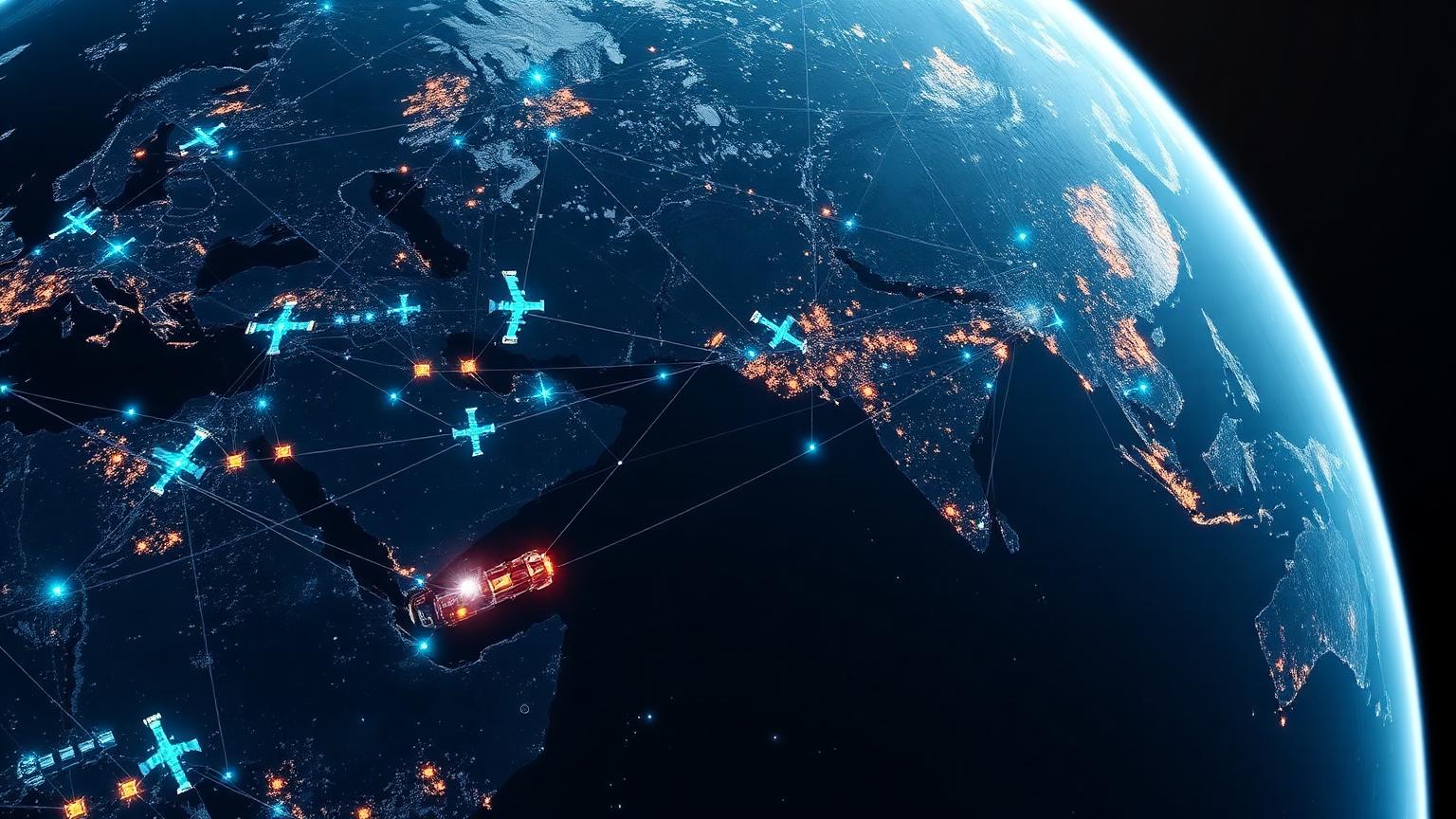
Track vessels, trade routes and congestion zones.

Logistics & Transport
See further to deliver more efficiently
Every day, thousands of goods, vehicles and infrastructure assets depend on precise data to operate efficiently.
Space technologies make it possible to track flows, anticipate disruptions and optimise operations on a global scale.
Context
Modern supply chains have become more complex, more international and more susceptible to disruption.
Weather conditions, infrastructure congestion, operational incidents or geopolitical events can all significantly impact performance.
Space data offers a global view that enables better understanding of flows, earlier anticipation of disruptions and improved decision-making.
Capabilities
Six observation families to understand, measure and anticipate changes in flows and infrastructure from orbit.
Track vessels, trade routes and congestion zones.
Monitor infrastructure and its surroundings.
Identify constraints and disruptions affecting transport.
Analyse vessel movements and infrastructure performance.
Optimise flows and the management of critical infrastructure.
Monitor strategic platforms and hubs.

Analysis of vessel movements and infrastructure performance.

Coordination of maritime, road, rail and air flows.
Use cases
Flow management and resource optimisation.
Improving operational fluidity.
Infrastructure management and disruption anticipation.
Securing supply chains.
Monitoring of critical infrastructure.
Optimisation of mobility and urban planning.
Method
A continuous value chain, from orbital observation to operational management.
Step 01
Global view of infrastructure.
Step 02
Precise tracking of mobile assets.
Step 03
Permanent global connectivity.
Step 04
Anticipating disruptions.
Step 05
Predictive analysis and optimisation.
Step 06
Faster, more reliable decisions.
Applications
Four scenarios illustrating how space data transforms logistics and transport.
Vessel tracking and congestion anticipation.
Identifying risks across supply chains.
Coordinating maritime, road, rail and air flows.
Monitoring critical assets and their environment.
Performance
Clear indicators to measure the impact of space technologies on your logistics operations.
Large-scale flow tracking
Rapid detection of disruptions
Better allocation of logistics resources
Anticipation of operational and climate risks
Digital twin
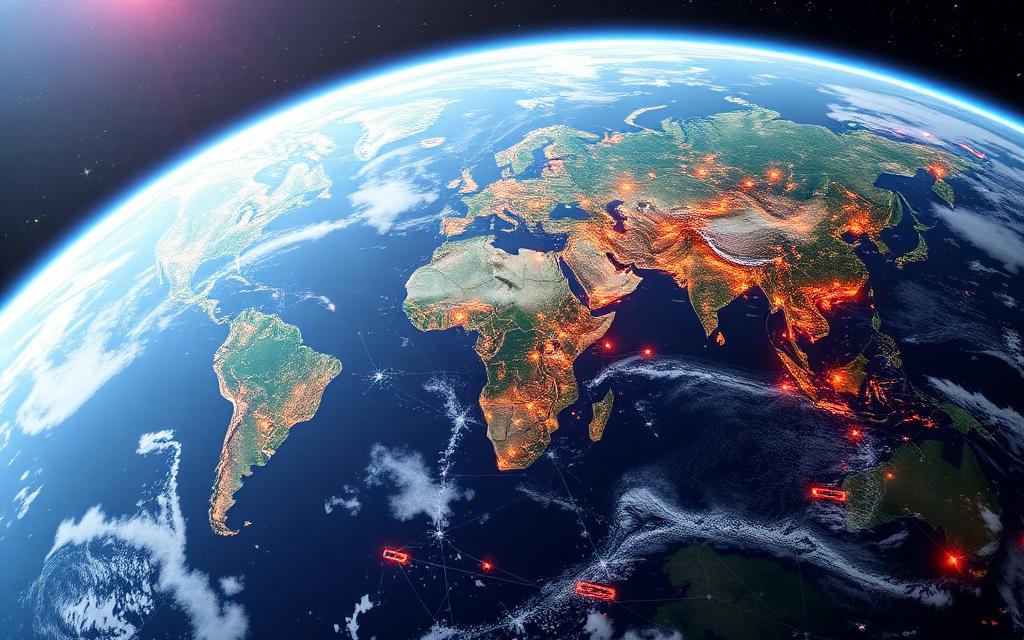
Space data now enables the creation of dynamic digital representations of supply chains.
These digital twins incorporate:
They provide a comprehensive view enabling operators to anticipate disruptions before they affect operations.
Resilience
Extreme climate events, geopolitical tensions and globalisation are making supply chains increasingly vulnerable.
Space technologies strengthen infrastructure resilience and improve business continuity by providing permanent situational awareness.
Why Hyperion
We identify the space technologies best suited to your logistics and industrial challenges.
Fusion of satellite, weather, traffic and operational data.
Turning complex data into actionable management tools for field teams.
Vision
Transport infrastructure is becoming increasingly connected, automated and strategically critical.
Space provides a unique capability to observe, understand and anticipate events that impact global flows.
This global view is a major lever for improving performance, reducing risks and strengthening organisational competitiveness.

Let's talk
Discover how space technologies can improve the visibility, performance and resilience of your infrastructure and supply chains.
Explore
Space is transforming many fields. Move from one sector to another to explore what orbital data can bring to your business.